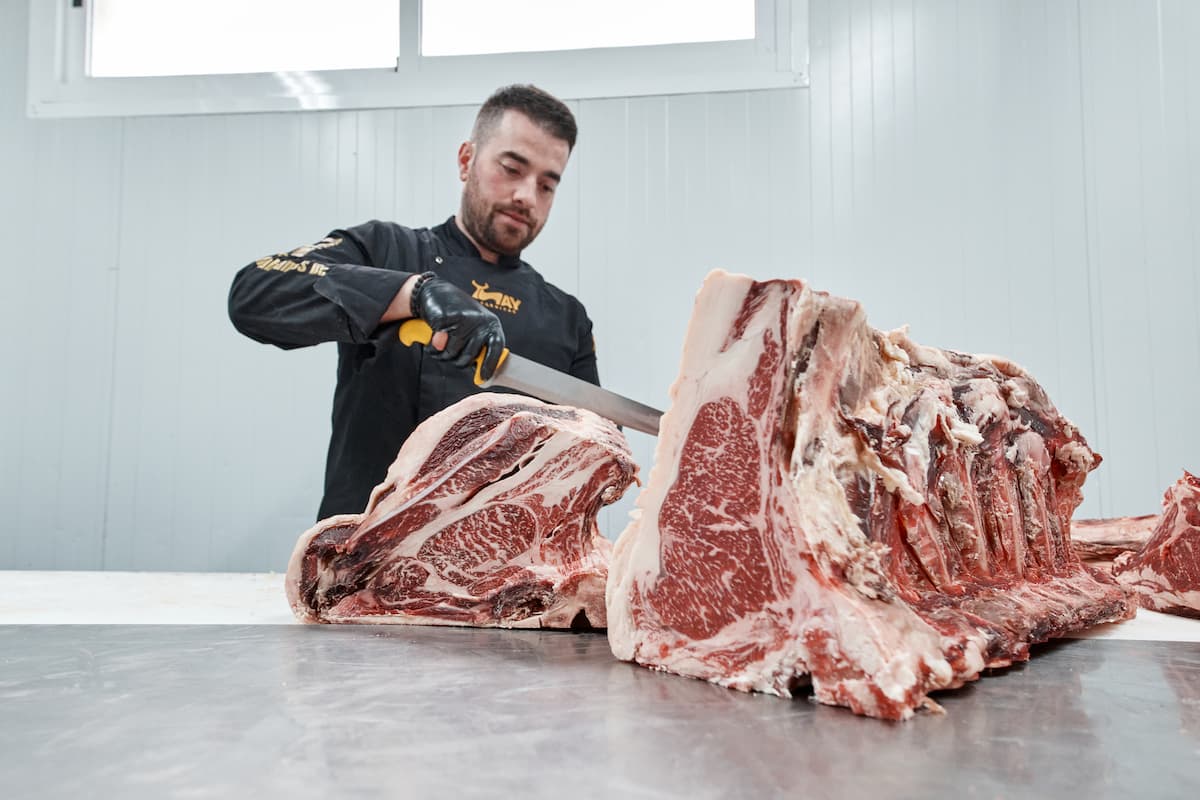
Aged ribeye steak with tomato sauce is a delicious dish that combines traditional Spanish cuisine with a gourmet touch. The aging process enhances the flavors and texture of the meat, making each bite a unique experience. If you love juicy, tender meat, this recipe is ideal for impressing your guests or enjoying a special meal at home. Furthermore, the tomato sauce perfectly complements the flavor of the ribeye, creating an irresistible combination.
The Aging of the Entrecote: A Different Touch for Your Meat with Tomato
What does maturation contribute to flavor and texture?
Aged ribeye steak is characterized by its greater juiciness, tenderness, and depth of flavor. Aging is a process that allows the meat to develop a softer texture and a more concentrated flavor. During this process, the meat’s natural enzymes break down the muscle fibers, enhancing its tenderness. This type of meat is perfect for preparing dishes like ribeye with tomato sauce, as its robust flavor pairs perfectly with the smoothness of the tomato sauce.
The difference between fresh and aged meat in your recipe
Using fresh beef in a recipe like this can yield delicious results, but aged ribeye takes the dish to another level. Fresh beef has a firmer texture and a less complex flavor compared to aged beef. By incorporating aged ribeye into your dish, you’ll achieve a more tender, juicy cut of meat with a deeper flavor that blends beautifully with the tomato.
Ingredients for a Perfect Meat with Tomato Recipe
To prepare this dish, you need few ingredients, but they must be high quality. The key is to choose a good aged ribeye steak, fresh tomatoes, and a few basic ingredients that enhance the flavor.
Basic ingredients for the dish
- Matured entrecote (preferably 200-300g per person)
- Ripe tomatoes (4-5 large units)
- Extra virgin olive oil (2 tablespoons)
- Garlic (2 cloves, finely chopped)
- Onion (1 medium, chopped)
- Salt and pepper to taste
- Red bell pepper (optional, to give it an extra touch of flavor)
- Bay leaf (optional)
Additional options to customize your recipe
While the classic beef and tomato dish is delicious on its own, you can add other ingredients to give it your personal touch. Some options include:
- Red wine to enrich the tomato sauce.
- Basil or rosemary for a more aromatic flavor.
- Olives for a touch of Mediterranean flavor.
- Piquillo peppers if you like sweeter flavors.
Step-by-step instructions for preparing the recipe
This recipe is quite simple to prepare, but the touch of quality comes from using fresh ingredients and the cooking technique. Below, we explain how to make it.
Preparing the ribeye steak: Seal in its flavor
- Prepare the meat : Take the ribeye steak out of the refrigerator about 30 minutes before cooking so that it comes to room temperature. This will help it cook more evenly.
- Searing : In a large, very hot skillet, add a little olive oil. Sear the ribeye steak for about 2-3 minutes per side, until golden brown on the outside but still juicy on the inside. Don’t overcook it to avoid losing its juiciness.
Tomato sauce: A classic with a special touch
- Prepare the sauce : In the same pan where you cooked the meat, add a little more olive oil and sauté the chopped onion and garlic until golden brown.
- Tomatoes : Add the peeled and diced tomatoes. Cook over medium heat for about 15-20 minutes until the tomatoes break down and form a thick sauce.
- Seasonings : Add salt, pepper, and a bay leaf for extra flavor. If you prefer a more acidic touch, you can add a splash of balsamic vinegar.
How to combine ingredients to create a delicious dish
- Adding the meat and sauce : Once the sauce is ready, place the ribeye steak in the pan and cover it with the tomato sauce. Cook over low heat for about 5-7 minutes to allow the flavors to meld. You can let the ribeye finish cooking in the sauce if you prefer it more well-done.
- Serving : Serve the entrecote with tomato accompanied by rice, potatoes or a fresh salad to balance the flavors.
Tips and Tricks for Perfect Meat
To ensure your meat turns out perfectly, there are a few tricks you can follow during the preparation process:
The ideal temperature for meat
Aged meat, being more tender, needs less cooking time. Make sure not to overcook it. Ideally, the meat should be seared on the outside but remain juicy on the inside.
Side dishes that complement the dish
Entrecote with tomato is a complete dish on its own, but if you want to accompany it with something else, options such as creamy mashed potatoes, a green leaf salad or even crusty bread to dip in the sauce are ideal.
Why Choose Aged Beef?
Benefits of aged ribeye in your diet
Choosing aged meat not only enhances the flavor of your dish but also offers nutritional benefits. Aged meat is more digestible due to the action of enzymes that break down proteins, making it easier for the body to assimilate. Furthermore, the aging process enhances natural nutrients, such as proteins and minerals, which can be more difficult to find in fresh meat.
Is it worth it? Nutritional and culinary advantages
Although dry-aged beef may be slightly more expensive than fresh beef, its benefits in flavor, texture, and digestibility justify the price difference. If you’re a meat lover, trying dry-aged beef is a culinary experience that will surprise you and make you appreciate traditional dishes like ribeye steak with tomato even more.